Are We Treating Wounds… or Just Dressing Them?
A Reality Check for Clinicians
For many chronic wound cases, particularly diabetic foot ulcers (DFU), treatment often revolves around dressing protocols, debridement procedures, and antibiotic adjustments. However, the core question remains:
Are we truly treating the wound—or simply maintaining it?
Dressings protect wounds from contamination but do not actively promote healing when microcirculation and oxygenation remain compromised. In complex DFU cases, continued use of dressings without escalation can delay recovery and increase amputation risk.
1. The Problem with “Wait and Watch”
Routine wound care typically includes:
- Delayed granulation tissue formation
- Slower epithelialization
- Ineffective antibiotic penetration
- Continuous necrotic progression
These are baseline care measures, not active healing interventions.
If granulation does not progress within 4–6 weeks of standard wound care, continuing the same protocol without escalation becomes a clinical risk.
Supporting Evidence
- DFUs with <30% wound reduction after 4 weeks are unlikely to heal without advanced therapy (IWGDF 2023).
- 85% of diabetes-related amputations start from a non-healing ulcer.
- Delayed therapeutic intervention is linked to 50–70% five-year mortality post-amputation.
2. Why Healing Stops — Clinical Breakdown
| Underlying Factor | Why Dressings Alone Fail |
|---|---|
| Microvascular impairment | No vasodilation |
| Local tissue hypoxia | No oxygen enhancement |
| Cellular inactivity | No metabolic stimulation |
| Resistant infection | Limited anaerobic control |
| Neuropathy | Late complication detection |
“Wound healing is not delayed due to poor dressing—it is delayed due to unmet physiological requirements.”
3. When Should Clinicians Escalate?
| Escalation Trigger | Clinical Indicator |
|---|---|
| Stalled wound closure | <30% progress in 4 weeks |
| Lack of granulation | No visible tissue growth |
| Post-debridement stagnation | No improvement |
| High-risk DFU | Wagner Grade ≥2 |
| Repeated dressing with no response | Therapy shift required |
4. Passive Maintenance vs Active Healing
| Treatment Type | Impact on Healing |
|---|---|
| Dressings + antibiotics | Maintenance only |
| Negative Pressure Wound Therapy | Moderate |
| Hyperbaric Oxygen Therapy | Systemic improvement |
| Topical Warm Oxygen Therapy | Active tissue repair |
5. Why Topical Warm Oxygen Therapy is the Next Step
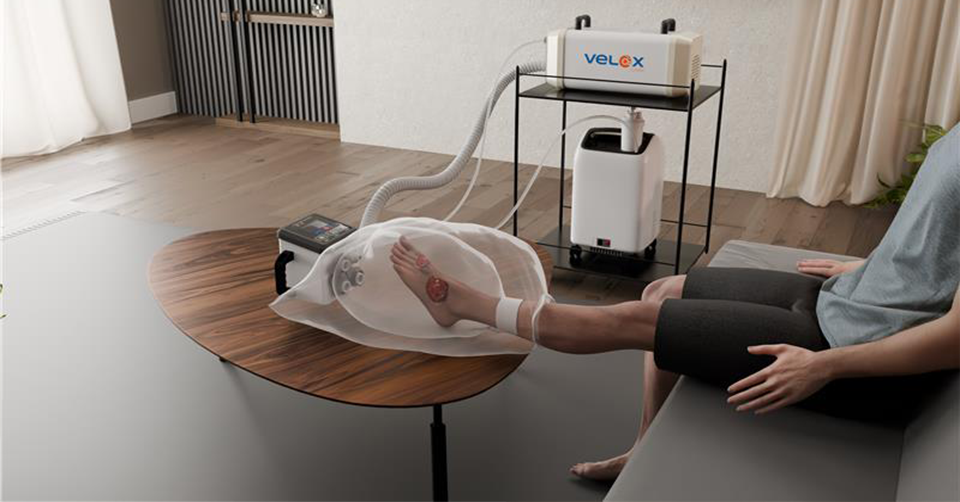
Topical Warm Oxygen Therapy delivers oxygen directly to the wound at controlled temperatures (39–42°C), enhancing microcirculation and activating tissue repair.
| Mechanism | Outcome |
|---|---|
| Thermal vasodilation | Improved blood flow |
| Local oxygen delivery | Metabolic activation |
| Enhanced tissue temperature | Faster granulation |
| Reduced anaerobic growth | Infection control |
📌 Internal VELOX Care case observations (2022–2024) reported accelerated healing in chronic DFU cases unresponsive to standard dressing care. Independent validation is in progress.
Final Clinical Message
“Dressing protects the wound. It does not heal it. When healing plateaus, intervention must escalate—not continue unchanged.”
VELOX Care — Designed for Clinical Escalation
✔ Deploy early when healing slows (not as a last option)
✔ Seamless with current dressing workflow
✔ Suitable for outpatient, inpatient, and home care wound programs
✔ Adopted by diabetology, vascular surgery, and wound care teams